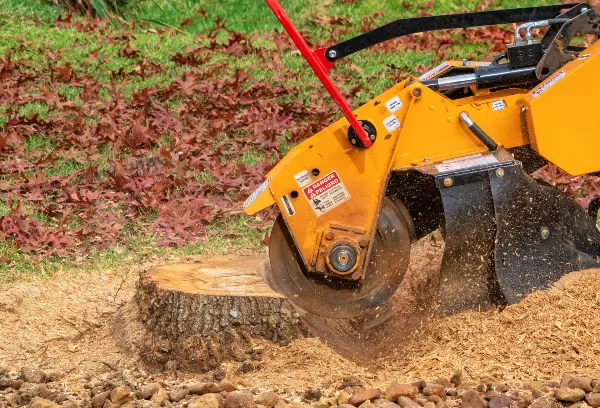
Why trim a tree?
- Remove dead limbs before they fall on your roof, car, or family
- Clear branches off the house, roof, and gutters
- Raise low limbs over the driveway, sidewalk, and lawn
- Let more sun reach your grass and gardens
- Cut back limbs rubbing on each other
- Fix weak branch angles on young trees before they split
- Shape the tree so it handles wind and snow better
The types of trimming we do
Deadwood removal
Dead branches are the most common thing we remove. They can fall any time, especially in wind. Taking them out also helps us spot other problems in the tree.
Crown thinning
We take out select branches inside the canopy so wind can pass through and light gets in. The tree keeps its natural shape. Thinning is done lightly. Taking too much weakens the tree.
Crown raising
We remove lower limbs to give clearance over the driveway, walkways, the street, or the lawn. Street clearance matters for trucks and school buses.
Clearance from the house
We cut back limbs touching the roof or siding. Branches on the roof damage shingles and give squirrels an easy way in.
Structural pruning for young trees
Pruning a young tree early builds a strong single trunk and good branch spacing. It prevents big problems 20 years from now.
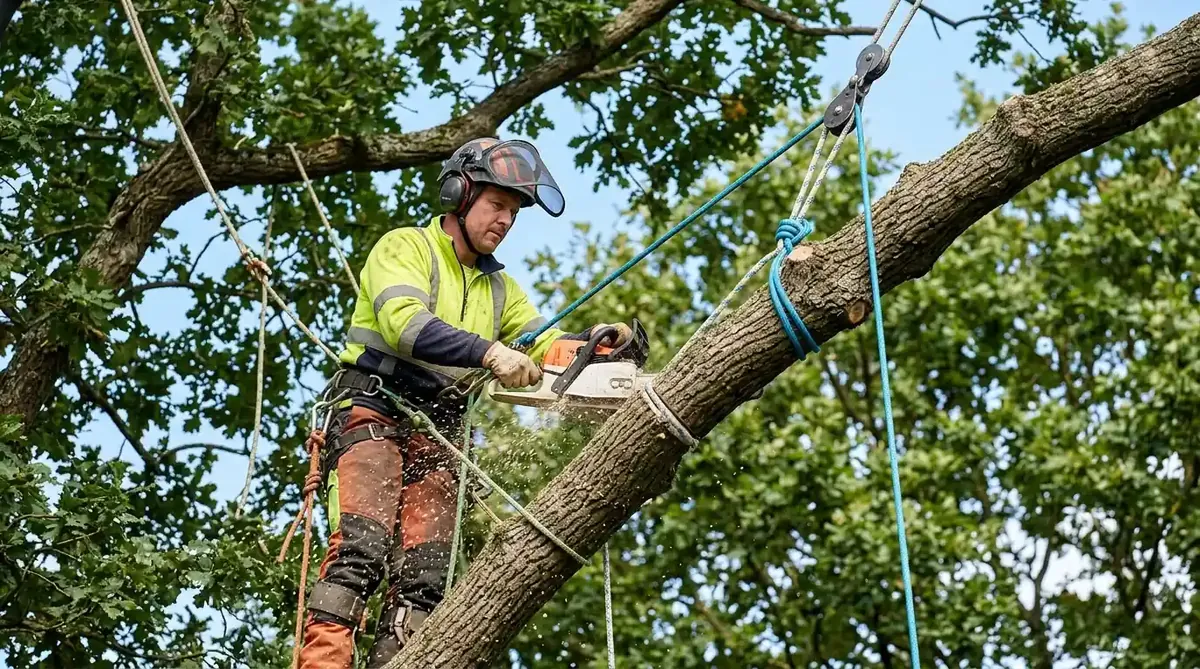
How we cut
How a branch is cut matters as much as which branch is cut.
We cut at the branch collar
Every branch has a slightly swollen ring where it meets the trunk. We cut just outside it. That lets the tree grow wood over the wound. Cutting flush with the trunk or leaving a long stub invites decay.
We use a three cut method on big limbs
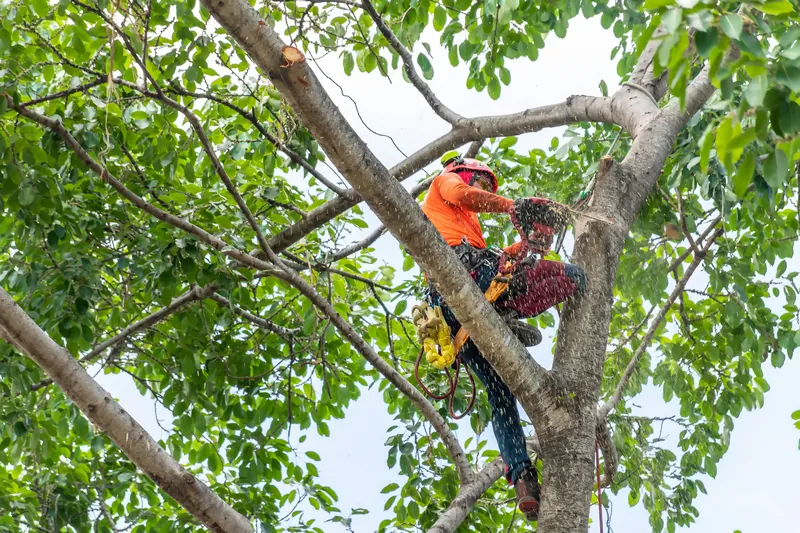
A heavy limb can tear bark down the trunk as it falls. We make an undercut, then a top cut to drop the weight, then a clean final cut at the collar.
We do not top trees
Topping means chopping the top of a tree off flat. It causes weak, fast sprouts that break easily and lets rot into the trunk. If a tree is truly too big for its spot, removal or careful reduction cuts are better.
We do not overdo it
Taking off too much live canopy at once stresses a tree. We remove what is needed and leave the rest for later if more work is wanted.
Timing matters in Illinois
Late fall through late winter is the best time to prune most trees. The tree is dormant, you can see the branch structure, and pests are less active.
Oaks are special. Oak wilt is a deadly fungus spread by beetles that are drawn to fresh cuts. In Illinois, avoid pruning oaks from spring through midsummer unless it is an emergency. We plan oak work for the dormant season.
Maples and birches may drip sap when pruned in late winter. That looks bad but does not hurt the tree. Dead or broken limbs can be removed any time of year. Read more in our guide on when to trim trees in Illinois.
Trim or remove?
If more than half of a tree is dead, if the trunk is badly cracked, or if the base is rotting, trimming will not fix it. In that case, tree removal is the safer choice. We will tell you honestly which makes sense.