The short answer
For most trees in Illinois, the best time to prune is late fall through late winter, while the tree is dormant. The exception that matters most is oaks: do not prune oaks from spring through midsummer.
Dead, broken, or dangerous branches can and should be removed any time of year.
Season by season
Late fall and winter: best for most trees
With the leaves gone, you can see the whole branch structure. The tree is resting, insects and fungus are less active, and frozen ground protects lawns from equipment. This is prime time for oak pruning too.
Early spring: okay, with care
Early spring before the leaves come out is still a good time for many trees. Maples, birches, and walnuts may bleed sap. That looks alarming but usually does not harm the tree.
Spring into midsummer: avoid oaks
Oak wilt is spread by small sap beetles that are attracted to fresh wounds on oaks, mostly from spring into early summer. A single cut at the wrong time can let the disease in. If an oak is damaged in a storm during this time, the wound should be dealt with right away.
Summer: light work only
Summer is fine for removing dead wood, clearing branches off the house, and light shaping. Avoid heavy pruning in hot, dry weather when trees are already stressed.
Early fall: go easy
Heavy pruning in early fall can push new growth that does not harden before winter. It is better to wait until the leaves drop.
Flowering and fruit trees
Spring bloomers
Trees like redbud, serviceberry, crabapple, and magnolia set their flower buds the year before. Pruning them in winter cuts off some of the flowers. If blooms matter to you, prune right after they finish flowering.
Fruit trees
Apples and pears are best pruned in late winter while dormant.
How to make a good cut
Find the branch collar
The branch collar is the slightly swollen ring of bark where a branch joins the trunk or a bigger limb. Cut just outside it. Do not cut flush with the trunk, and do not leave a long stub.
Use three cuts on heavy limbs
First, an undercut a foot or so out from the trunk. Second, a top cut a little farther out, which lets the limb drop without tearing bark. Third, a clean final cut at the collar.
Do not paint wounds
Wound paint and sealers are not needed on most trees. A good cut at the collar lets the tree seal itself.
Do not top trees
Cutting off the top of a tree creates weak sprouts and invites rot. If a tree is too big for its spot, reduction cuts or removal are better choices.
Do not take too much
Removing a big share of the live canopy at once stresses the tree. Spread major work over more than one season.
When to call a pro
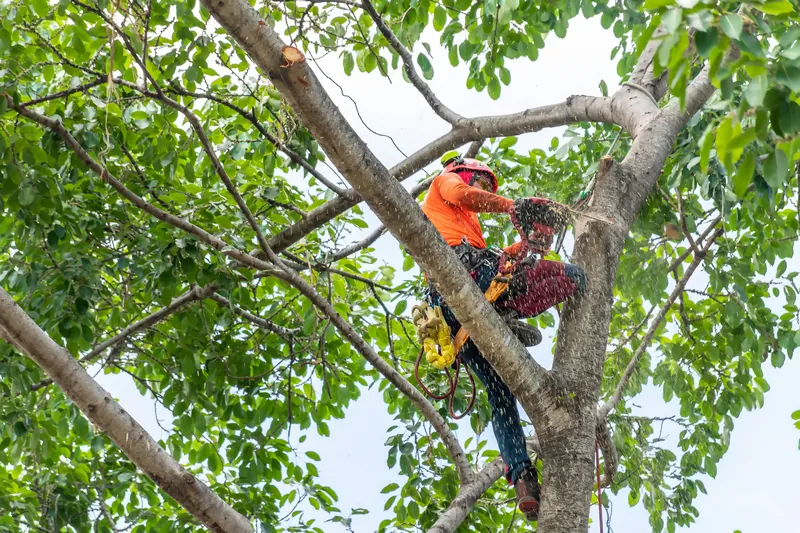
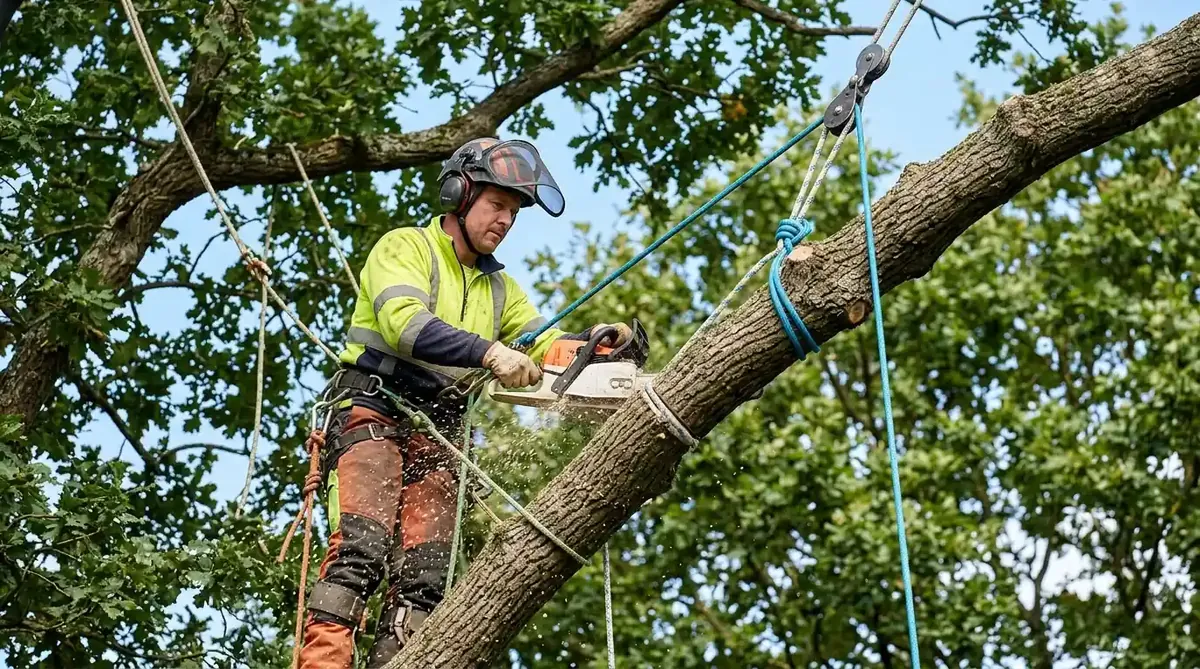
Anything you cannot reach from the ground, anything near power lines, and any limb big enough to damage something when it falls is a job for a tree crew. Our climbers handle this work every day. See our tree trimming service, or read about Illinois native trees.